




Powering Electronics: How Multi-Functional Sticker Labels Enable New Industry Breakthroughs
The electronics industry operates at a relentless pace. Devices shrink while capabilities expand. Production volumes soar while tolerances tighten. Throughout this high-speed evolution, one small component plays an outsized, often invisible role: the electronic label. From the smartphone in your pocket to the electric vehicle charging in your garage, sticker labels are essential for identification, safety, traceability, and performance.
Today’s electronic labels are far more than simple price tags or brand stickers. They are engineered materials—often no thicker than a human hair—that can withstand extreme heat, dissipate static electricity, resist counterfeiting, or even communicate wirelessly via embedded chips. As the electronics industry pushes toward miniaturization, sustainability, and smart connectivity, multi-functional labels are evolving right alongside.
This article explores the diverse world of electronic labels, their critical applications across devices and components, and the emerging trends—ultra-thin electronic labels, biodegradable electronic labels, and RFID labels for electronics—that are shaping the future.

The Diverse Family of Electronic Labels
Not all labels perform the same job. The electronics industry demands a range of specialized sticker labels, each designed for a specific environment or function.
High-Temperature Resistant Electronic Labels
Electronics manufacturing involves heat—often extreme heat. During soldering (reflow ovens can exceed 260°C / 500°F), components and circuit boards are subjected to temperatures that would destroy ordinary paper or adhesive labels. High-temperature resistant electronic labels, typically made from polyimide (PI) or specialized polyester films, withstand these conditions without shrinking, delaminating, or carbonizing.
These labels are essential for:
-
PCB labels (printed circuit board identification)
-
Component tracking through reflow soldering
-
High-power electronic nameplates that operate at elevated temperatures
Anti-Static Labels for Electronics
Static electricity is the silent killer of sensitive electronic components. A single electrostatic discharge (ESD) can destroy a microprocessor, corrupt memory, or damage a sensor—often invisibly. Anti-static labels for electronics are designed with special coatings or incorporated conductive materials that prevent static buildup and safely dissipate charges.
These labels are critical in:
-
Semiconductor manufacturing cleanrooms
-
Hard drive and SSD assembly lines
-
Mobile phone and tablet production
-
ESD-sensitive component packaging
Some anti-static labels also feature static-dissipative adhesives, ensuring that even the act of peeling the label from its liner doesn't generate a damaging charge.
Anti-Counterfeit Electronic Stickers
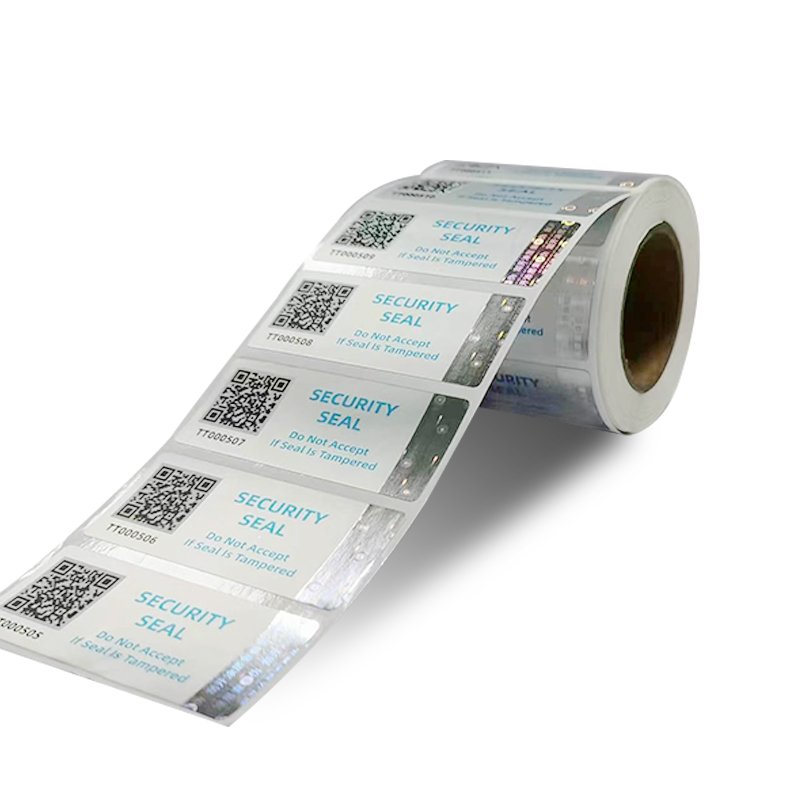
Counterfeit electronic components are a multi-billion-dollar problem. Fake ICs, capacitors, and connectors can lead to product failures, safety hazards, and brand damage. Anti-counterfeit electronic stickers incorporate security features that make forgery extremely difficult.
Common anti-counterfeit technologies include:
-
Holographic foils that change appearance when tilted
-
Microtext or guilloche patterns that cannot be reproduced by standard printers
-
Tamper-evident materials that leave "VOID" or checkerboard patterns upon removal
-
Serialized QR codes linked to blockchain-verified databases
For high-value components (aerospace, medical devices, automotive electronics), these electronic anti-counterfeit stickers provide a crucial layer of supply chain security.
RFID Labels for Electronics
Perhaps the most transformative technology is RFID labels for electronics. Radio Frequency Identification (RFID) embeds a tiny chip and antenna into a label, allowing it to be read wirelessly from a distance—without line of sight. Unlike barcodes, RFID tags can be read hundreds at a time, through packaging, and in harsh environments.
RFID labels are revolutionizing:
-
Work-in-progress tracking on assembly lines
-
Inventory management in electronics warehouses
-
Warranty and service tracking for returned devices
-
Theft prevention in retail electronics displays
When combined with ultra-high-frequency (UHF) technology, RFID labels enable real-time, automated visibility across the entire electronics supply chain.
Lithium Battery Labels
The rapid growth of electric vehicles, portable electronics, and energy storage systems has created a specialized need: lithium battery labels. These labels must withstand electrolyte exposure, temperature extremes, and mechanical stress while providing critical safety information.
Lithium battery labels typically include:
-
UN38.3 certification marks for transport compliance
-
Watt-hour ratings and voltage specifications
-
Recycling symbols and disposal warnings
-
QR codes linking to safety data sheets
Because lithium batteries are classified as dangerous goods for shipping, these labels must meet stringent durability and adhesion requirements. Many are made from high-temperature resistant electronic labels materials with aggressive, chemical-resistant adhesives.
Critical Applications Across the Electronics Ecosystem
Electronic labels appear in nearly every corner of the electronics world. Here are some of the most common use cases.
Mobile Phone and Computer Traceability
Inside every smartphone, laptop, and tablet, tiny electronic component labels track individual parts through assembly. A PCB label might carry a serial number that links to test data from that specific circuit board. A flex cable might carry a QR code identifying its batch and manufacturing date. If a device fails in the field, these labels enable precise root-cause analysis and targeted recalls.
Appliance Warning and Rating Labels
Washing machines, refrigerators, air conditioners, and microwaves all carry appliance labels that provide critical safety and operational information:
-
Electrical ratings (voltage, current, wattage)
-
Refrigerant type and charge amount
-
Safety warnings (e.g., "Risk of fire" or "Disconnect power before servicing")
-
Energy efficiency ratings (Energy Star, EU energy label)
These labels must remain legible for the life of the appliance—often 10-20 years—in environments that may include heat, moisture, and cleaning chemicals. Durable synthetic electronic labels with permanent adhesives are standard here.
Electric Vehicle and Battery Packs
Modern EVs contain hundreds of individual lithium-ion cells, plus battery management systems (BMS), cooling plates, and high-voltage cabling. Electronic labels are everywhere:
-
Cell and module serial numbers for warranty tracking
-
High-voltage warning labels in bright orange (internationally recognized for EV safety)
-
BMS calibration labels with QR codes linking to software configuration data
-
Recycling instructions for end-of-life battery processing
Given the demanding environment (vibration, temperature swings, potential moisture), lithium battery labels must be exceptionally durable. Polyester and polyimide constructions with solvent-resistant adhesives are typical.
Component Nameplates and Branding
Even a simple electronic nameplate—the foil or plastic badge bearing a brand logo and model number—has evolved. Today's nameplates may incorporate:
-
Brushed metal or chrome-like finishes for premium aesthetics
-
Embossed or debossed textures for tactile appeal
-
Serialized data matrix codes hidden within the design
-
RFID inlays for smart product registration
For consumer electronics brands, the nameplate is often the only physical branding on a sleek, minimalist device. Achieving a flawless, long-lasting bond to curved metal or glass surfaces requires precision adhesive engineering.
Emerging Trends: Miniaturization, Sustainability, and Intelligence
The electronic labels industry is not static. Three major trends are driving innovation: miniaturization, green materials, and smart connectivity.
Trend 1: Ultra-Thin and Miniaturized Labels
As electronic devices become smaller and more densely packed, the labels on them must shrink as well. Ultra-thin electronic labels—some measuring just 10-20 microns thick (thinner than a human hair)—are now available. These labels fit into gaps between components, adhere to miniature chips, and add negligible weight or bulk.
The challenge with ultra-thin labels is maintaining print quality, adhesive strength, and durability. Advanced coating technologies and precision die-cutting have made these micro-electronic labelscommercially viable.
Trend 2: Biodegradable and Compostable Electronic Labels
Sustainability is a growing priority for the electronics industry. E-waste is the world's fastest-growing waste stream, and labels are part of the problem—most are plastic-based and not biodegradable. Biodegradable electronic labels made from PLA (polylactic acid), cellulose, or other bio-polymers are emerging as alternatives.
These green electronic labels are designed to:
-
Break down in industrial composting facilities (within 6-12 months)
-
Meet RoHS and REACH compliance (no restricted hazardous substances)
-
Perform adequately for the product's useful life (then degrade afterward)
While biodegradable labels cannot yet match the extreme durability of polyimide for soldering applications, they are suitable for many consumer electronics uses (e.g., battery labels, internal tracking stickers, packaging labels).
Trend 3: Smart Labels and Full Lifecycle Traceability
The Internet of Things (IoT) demands that physical objects identify themselves digitally. RFID labels for electronics and NFC (Near Field Communication) tags embedded in labels enable this connectivity.
A smartphone, for example, might contain a hidden NFC tag in its housing. When a service technician taps the phone with a reader, the tag reveals:
-
Manufacturing date and location
-
Repair history (previous service events)
-
Authenticity verification
-
Warranty status
On a larger scale, pallets of electronic components fitted with UHF RFID tags can be scanned automatically as they enter and exit warehouses, providing real-time inventory visibility without manual barcode scanning.
Customization and Digital Manufacturing
Gone are the days when electronic labels came in only standard sizes and white paper. Today's digital label printing technologies enable:
-
No tooling costs for custom shapes or small runs
-
Variable data printing (every label can have a unique serial number or QR code)
-
Short turnaround times (days, not weeks)
-
Low minimum order quantities (ideal for prototypes or limited editions)
For electronics manufacturers, this means custom electronic labels are accessible even for small-batch production or pilot runs.
Conclusion: An Indispensable Enabler
The electronics industry could not function without its unsung hero: the electronic label. From high-temperature resistant electronic labels that survive soldering to anti-static labels for electronics that protect sensitive components, from RFID labels for electronics enabling smart logistics to lithium battery labels ensuring safe transport—these small stickers are indispensable.
Looking forward, the trends of miniaturization, biodegradable materials, and smart connectivitywill only accelerate. Ultra-thin electronic labels will fit into ever-tighter spaces. Biodegradable electronic labels will help address the e-waste challenge. And electronic traceability labels with RFID will deliver real-time visibility across global supply chains.
For electronics brands, component suppliers, and contract manufacturers, investing in the right label is not a trivial detail—it is a strategic decision that impacts quality, compliance, brand reputation, and operational efficiency. The label may be small, but its contribution is anything but.
Ready to equip your electronic products with next-generation labeling? Contact us to explore electronic labels tailored to your specific application—whether high-temperature, anti-static, anti-counterfeit, RFID-enabled, or ultra-thin and eco-friendly.